Seal of Tsongkha ArtQuji Angxiu曲吉昂秀

曲吉昂秀

ཙོང་ཁTsongkha Thangka · Qinghai宗喀唐卡 · 青海湟中

Quji Angxiu

A thangka painter trained at Kumbum Monastery since 1982. He paints Buddhist icons by the classical canon of proportion, often on a single ground of red, black, gold, silver, blue or green.

1982 年起随塔尔寺艺僧学艺,依度量经绘制佛像,尤擅以红、黑、金、银、蓝、绿单色铺底的唐卡。

Representative Inheritor of Tsongkha Thangka · Master of Arts & Crafts, Qinghai · Four works in the China National Arts & Crafts Museum

宗喀唐卡省级非遗代表性传承人 · 青海省工艺美术大师 · 四幅作品被中国工艺美术馆收藏

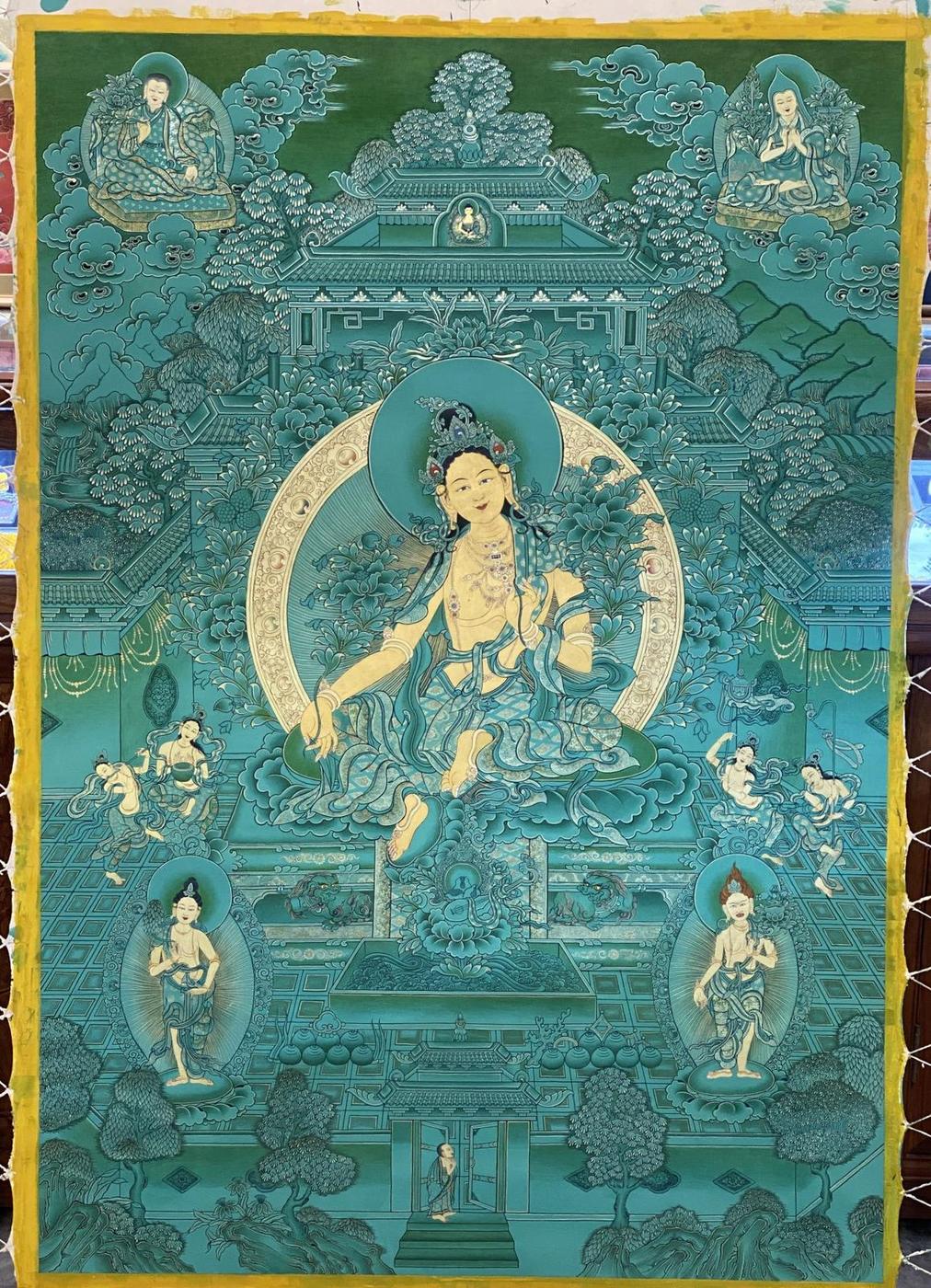
Green-ground thangka of Green Tara
Green Tara · green ground · 110 × 80 cm绿度母 · 绿唐 · 110 × 80 cm

Melbourne 2026墨尔本 2026

Exhibition & auction · Melbourne, Australia · November 2026展览与拍卖 · 澳大利亚墨尔本 · 2026 年 11 月

Fifty-seven thangkas from the Tsongkha Art Center宗喀艺术中心唐卡五十七幅

Painted in Huangzhong by Quji Angxiu together with the painters of his studio, most of them his own former students. Every figure is drawn to the canon of proportion and painted in ground mineral pigment, cinnabar and gold; many of the works lay the whole field in a single colour. Each entry names the painters who worked on it.

由曲吉昂秀与工作室画师在湟中共同绘制,画师多为他亲手培养的学生。每一尊像都依度量经起稿,以研磨的矿物颜料、朱砂与金绘成,其中许多作品以单色铺满画面。每幅作品均注明参与绘制的画师。

  • 57thangkas幅唐卡
  • 21on a single-colour ground幅单色底
  • 10painters of the studio位画师

Prices on request. Please quote the catalogue number when you write to studio@tsongkha.com. Sizes are as recorded by the studio, height × width; “incl. mount” means the size includes the traditional brocade border.价格请来询,来信请注明作品编号:studio@tsongkha.com。尺寸为工作室登记尺寸;注明“含装裱”者包含传统织锦边。

The making工艺

How a thangka is made一幅唐卡如何完成

A thangka of this size takes many months. Nothing on it is improvised: the measures come from scripture, the colours from the earth, and the gold is laid by hand.

一幅这样尺幅的唐卡往往需要数月。画面上没有随意之笔:比例出自经典,颜色取自大地,金由手一笔笔落下。

  1. 一The ground打底

    Cotton is stretched on a frame, primed and burnished until the surface is smooth enough to hold a hair-fine line.

    棉布绷上画框,上底、反复打磨,直到画面平滑得能承住一根发丝般的线。

  2. 二The measure度量

    Each figure is laid out on the iconometric grid of the scriptures, so that every proportion follows the canon.

    依度量经打格起稿,每一尊像的比例都合乎经典。

  3. 三The colour设色

    Ground minerals and cinnabar are mixed with glue and laid in thin layers; on single-ground works, one colour fills the whole field.

    研磨的矿物颜料与朱砂调胶,层层薄涂;单色底唐卡则以一色铺满全幅。

  4. 四Gold and the eyes描金与开眼

    Gold is drawn and burnished last. By tradition the eyes are painted at the very end, when the image is complete.

    最后勾金、磨金。按传统,佛像的眼睛在全部完成时才画上。

Lineage师承

Trained at Kumbum, measured in India学艺塔尔寺,求法于印度

Huangzhong is the county around Kumbum Monastery, built at the birthplace of Je Tsongkhapa. The Tsongkha school of thangka is named after this region.

湟中是塔尔寺所在地,也是宗喀巴大师的诞生地。“宗喀唐卡”即以此地命名。

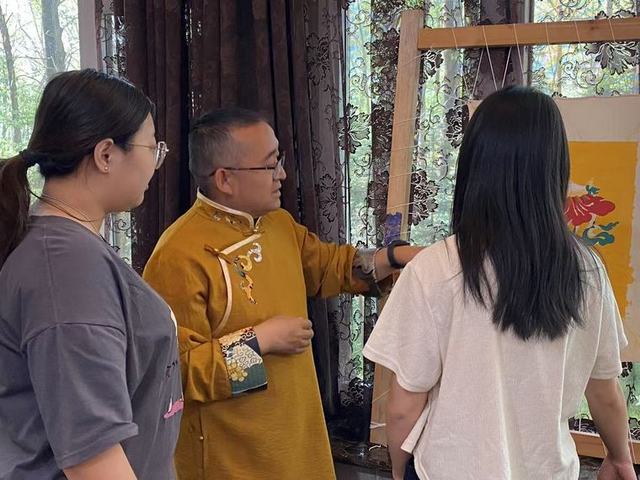
Quji Angxiu teaching students in front of a thangka
Quji Angxiu at work on a thangka Portrait of Quji Angxiu

Teaching at the Tsongkha Art Center, and at work.在宗喀艺术中心授课与作画。

Quji Angxiu was born in 1970 in Gonghe Town, Huangzhong, Qinghai. In 1982 he began training under Tashi Nyima (born 1922), an artist-monk of Kumbum Monastery who had entered the monastery at seven and mastered all three of its renowned arts. From him he learned butter sculpture, painted thangka, appliqué thangka and the decorative painting of temple buildings.

From 1992 to 1995 he studied in India under the Buddhist painter Sangye Yeshi, concentrating on iconometry: the measurements that fix the proportions of every sacred figure.

He has painted and taught Tsongkha thangka professionally for twenty-eight years. He co-wrote the school textbooks on thangka and appliqué, and more than twenty of his students now run their own studios.

曲吉昂秀,1970 年生于青海湟中县共和镇。1982 年随塔尔寺著名老艺僧扎西尼玛学习酥油花、唐卡、堆绣和古建筑彩绘。扎西尼玛生于 1922 年,七岁在塔尔寺出家,习五明之一的工巧明,精通塔尔寺“艺术三绝”。

1992 至 1995 年,他赴印度拜佛画大师桑杰叶茜为师,专习唐卡度量经。

从事唐卡绘制和教学 28 年,致力于宗喀唐卡的传承和发展。参与编写《唐卡校本教材》《堆绣校本教材》,二十多位学生已独立施艺创业。

  1. Born in Gonghe Town, Huangzhong, Qinghai生于青海湟中县共和镇
  2. Begins training under Tashi Nyima at Kumbum Monastery随塔尔寺艺僧扎西尼玛学艺
  3. Studies iconometry in India under Sangye Yeshi, until 1995赴印度随桑杰叶茜学习度量经,至 1995 年
  4. Named Master of Arts & Crafts of Qinghai Province获评第五届青海省工艺美术大师
  5. Named Representative Inheritor of Tsongkha Thangka, provincial intangible cultural heritage命名为宗喀唐卡省级非遗代表性传承人
  6. Fifty-seven thangkas travel to Melbourne for exhibition and auction五十七幅唐卡赴澳大利亚墨尔本展览与拍卖

4works in the China National Arts & Crafts Museum幅作品被中国工艺美术馆收藏
20+gold, silver and bronze awards at national competitions项全国工艺品大赛金、银、铜奖
20+former students running their own studios位学生已独立施艺创业
9students certified as Qinghai folk craft artists位学生获评青海省民间工艺美术师

Earlier works作品选

One ground, then the line一色为底,再落线

Most thangkas are painted in full colour. Much of Quji Angxiu’s work instead lays the whole field in one colour, then draws the figures over it in fine line and gold. This selection is drawn from his exhibitions and award entries in China and abroad. Tap any painting to see it large.

传统唐卡多为彩唐。曲吉昂秀的许多作品先以一色铺满画面,再以细线和金勾勒佛像。以下作品选自他在国内外的展览与获奖作品,点开可看大图。

Honours荣誉

Shown in Beijing and across Europe展于北京,也走到海外

His work has been exhibited at the National Museum of China, the China National Arts & Crafts Museum, the National Art Museum of China and the Beijing Arts & Crafts Museum, and toured Germany, France, Italy, Belarus and Kyrgyzstan with Harmony and Divine Craft: Contemporary Chinese Arts & Crafts.

作品多次在国家博物馆、中国工艺美术馆、中国美术馆、北京工艺美术馆展出,并随“和美神工——中国当代工艺美术精品展”赴德国、法国、意大利、白俄罗斯、吉尔吉斯斯坦等地展览。

  • Selected, 3rd China Contemporary Arts & Crafts Biennale入选第三届中国当代工艺美术双年展
  • Selected, 4th Biennale at the National Museum of China, with the series Life of the Buddha《释迦牟尼生平》入选第四届双年展(国家博物馆)
  • “China Good Craftsmanship”, 2nd edition, Chinese National Academy of Arts中国艺术研究院第二届“中国好手艺”
  • Gold Award, 20th China Arts & Crafts Masters’ Works and Fine Handicrafts Expo第 20 届中国工艺美术大师作品暨手工艺精品博览会金奖
  • Shakyamuni and the Eighteen Arhats shown at Prince Gong’s Mansion, Beijing《释迦牟尼与十八罗汉》参加恭王府非遗展
  • The Five Wealth Deities enters the China National Arts & Crafts Museum collection《五路财神》被中国工艺美术馆收藏
  • “China Good Craftsmanship”, 4th edition第四届“中国好手艺”
  • Selected, 7th Biennale, with Buddhas of the Three Times黑唐《三世佛》入选第七届双年展
Titles and positions (11)称号与任职(11 项)
  • Representative Inheritor of Tsongkha Thangka, Qinghai provincial intangible cultural heritage
  • Master of Arts & Crafts, Qinghai Province
  • Director, Tsongkha Art Center, Huangzhong
  • President, Huangzhong Thangka Association
  • Juror, 5th and 6th Qinghai Master of Arts & Crafts and Folk Craftsman evaluations
  • Kunlun Talents: Leading Talent in Arts & Crafts demonstration studio
  • Qinghai Provincial Rural Craftsman, with a provincial craftsman workstation
  • Member of the Art Committee, He Art Museum, Beijing
  • Visiting Professor, Qinghai Provincial Art School; Distinguished Master, Xining Century Vocational & Technical School
  • Member, China Folk Literature and Art Association; Member, China Arts & Crafts Association
  • Deputy, 18th Xining Municipal People’s Congress and 3rd Huangzhong District People’s Congress
  • 宗喀唐卡省级非物质文化遗产代表性传承人
  • 青海省工艺美术大师
  • 宗喀艺术中心负责人
  • 湟中区唐卡协会会长
  • 第五届、六届青海省工艺美术大师、民间工艺师评委
  • 昆仑英才·工艺美术领军人才示范工作室
  • 青海省级乡村工匠、省级乡村工匠工作站
  • 北京和·艺术馆艺术委员会委员
  • 青海省艺校客座教授;西宁世纪职业技术学校特聘大师
  • 中国民间文艺家协会会员;中国工艺美术协会会员
  • 西宁市第十八届人大代表;湟中区第三届人大代表

Contact联系

Tsongkha Art Center宗喀艺术中心

Email邮箱
studio@tsongkha.com
Phone电话
+86 139 9701 4373+86 971 223 6873
Studio地址
73–75 Yingbin Road, Huangzhong District, Xining, Qinghai, China青海省西宁市湟中区迎宾路 73–75 号青海省西宁市湟中区迎宾路73-75号
WeChat QR code for Tsongkha Art Center
WeChat · scan to add the studio微信扫码,添加工作室

Click to look closer · drag to explorePinch or double-tap to look closer点击放大,拖动细看双指缩放或双击,细看笔触